How RideMate Verifies Drivers & Passengers
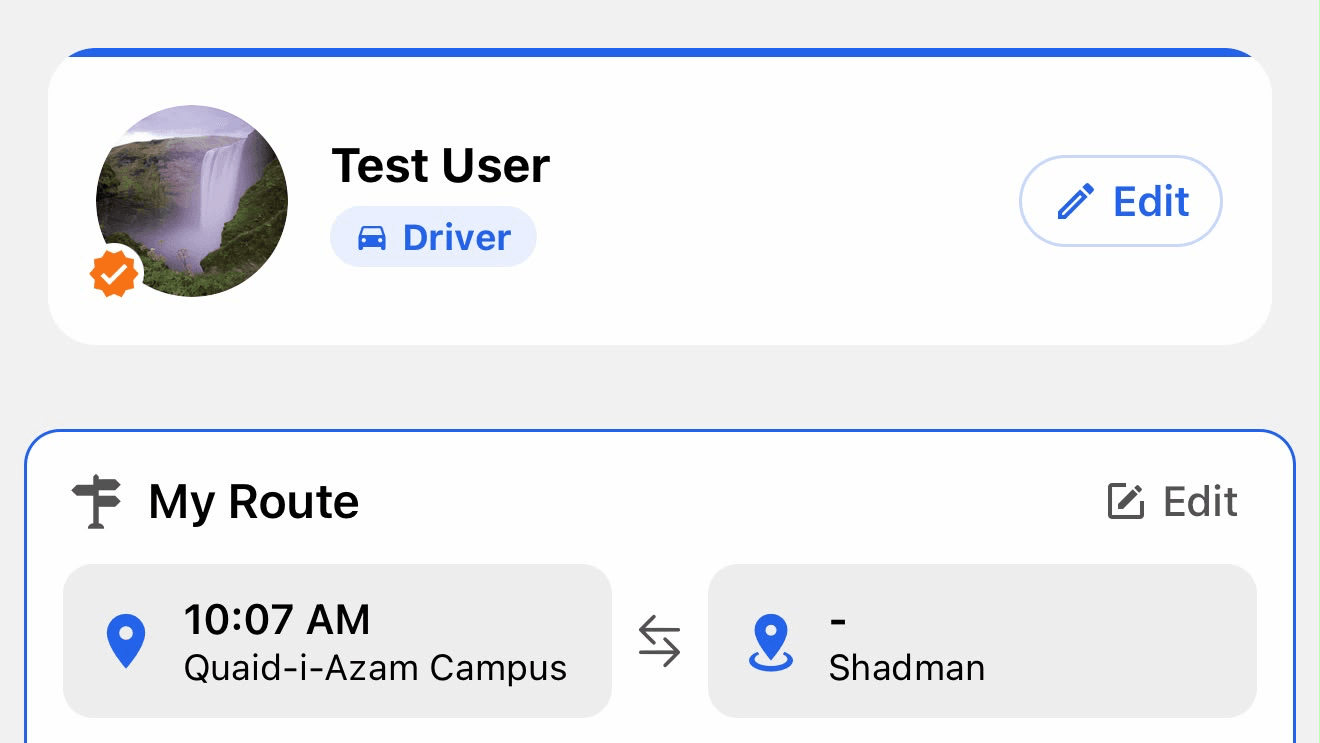
Ask anyone who's hesitated before their first carpool what stopped them, and the answer is rarely the price. It's the question that comes right before you get in a stranger's car: who is this person, actually?
That question is why RideMate's verification process exists, and why we'd rather explain it plainly than just put a badge on a profile and ask you to trust it. Here's exactly what happens before a driver can host a ride, what passengers see before they book, and what verification can and can't guarantee.
What a driver has to submit before their first ride
No documents, no rides — this isn't a soft policy, it's a hard gate in the app. Every driver on RideMate submits four things before their profile goes live:
Vehicle details
Make, model, and colour, so what shows up matches what you were told to expect.
Vehicle registration
Confirms the car is legally registered and its details check out.
Driving license
Confirms the driver is legally licensed to be behind the wheel.
CNIC
Ties the account to a real, verifiable identity — not an anonymous phone number.
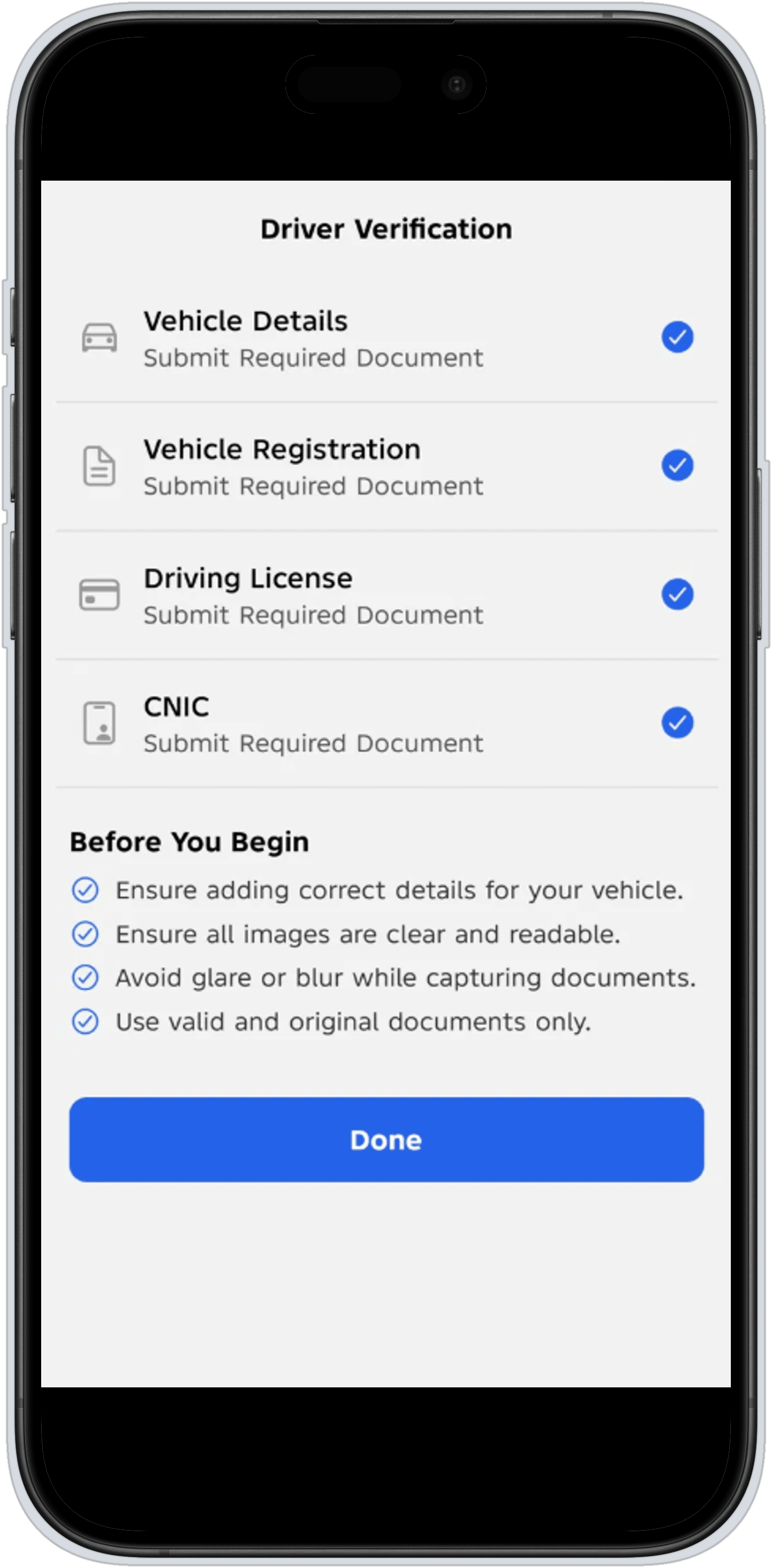
Once all four clear review, the driver's profile carries a verified badge — the small orange tick you'll see next to a name. It's the same badge on every verified driver, which is the point: it's not a marketing flourish, it's a gate that either got passed or didn't. And because RideMate's Daily Route Rides match you with the same driver or passenger on your regular commute, verification isn't something you're re-checking on a stranger every morning — it's someone you already know, day after day.
Passengers aren't a blind spot either
Most carpooling conversations focus entirely on driver safety, which makes sense — drivers are strangers behind the wheel of a moving vehicle. But a driver getting into a car with unverified strangers is exactly the same problem, mirrored.
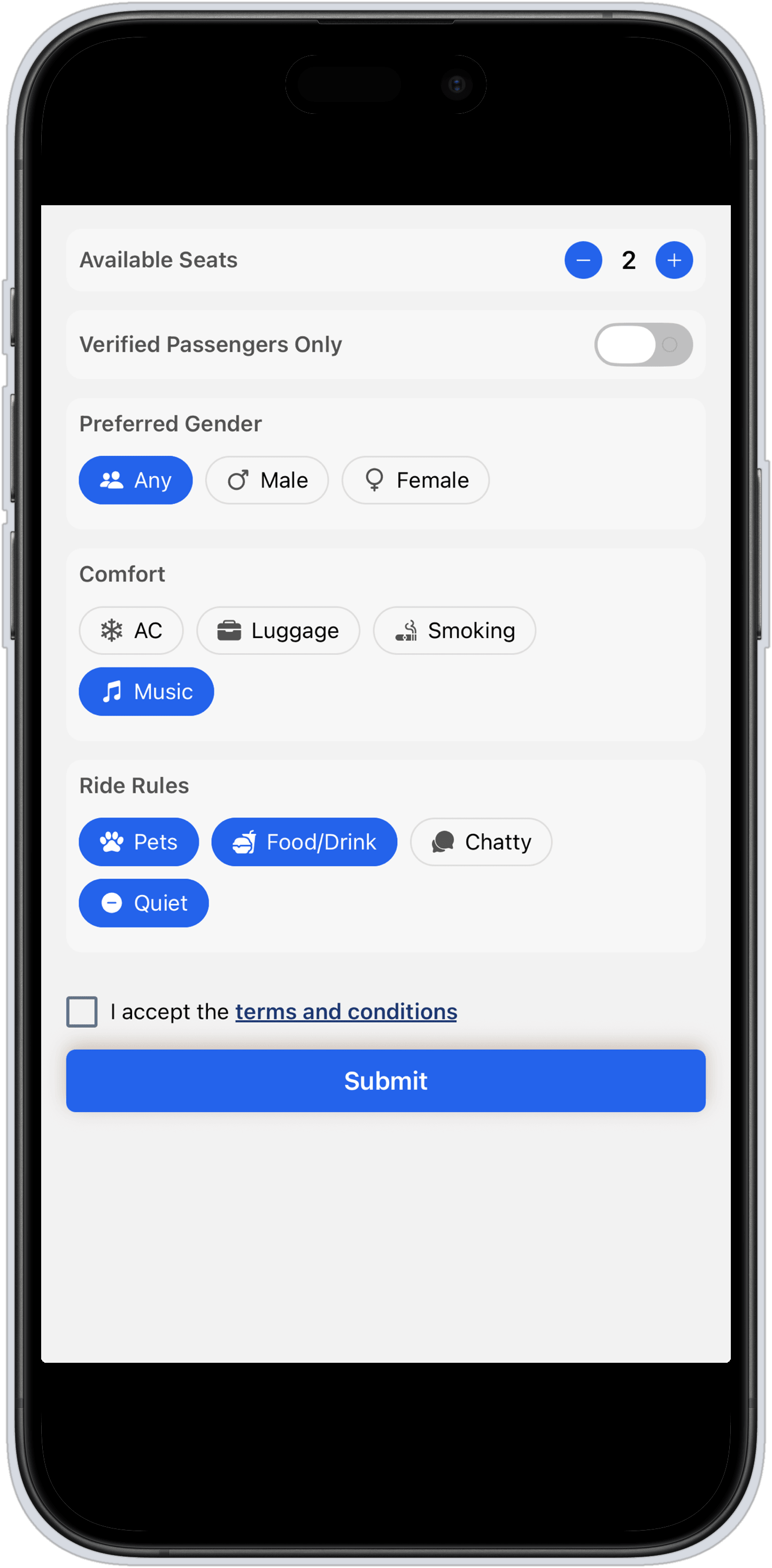
That's why verification runs both directions. Passengers verify their identity too, through a separate CNIC check, and drivers control who they'll accept: a verified passengers only toggle restricts a driver's ride to passengers who've completed that verification, full stop. It's off by default, on by choice — drivers decide how cautious they want to be, and RideMate gives them the switch to act on it.
Built for a country where gender isn't a preference — it's the deciding factor
In Pakistan, whether a commute is even an option for a woman often comes down to one question: who else is in the car. That's why gender sits inside RideMate's core matching logic, not bolted on as a filter. Passengers specify male or female seats when requesting a ride. Drivers can set a preferred passenger gender, or restrict their car to verified passengers only. And every ride card shows the gender make-up before anyone commits to booking.
You see the whole picture before you ever get in the car
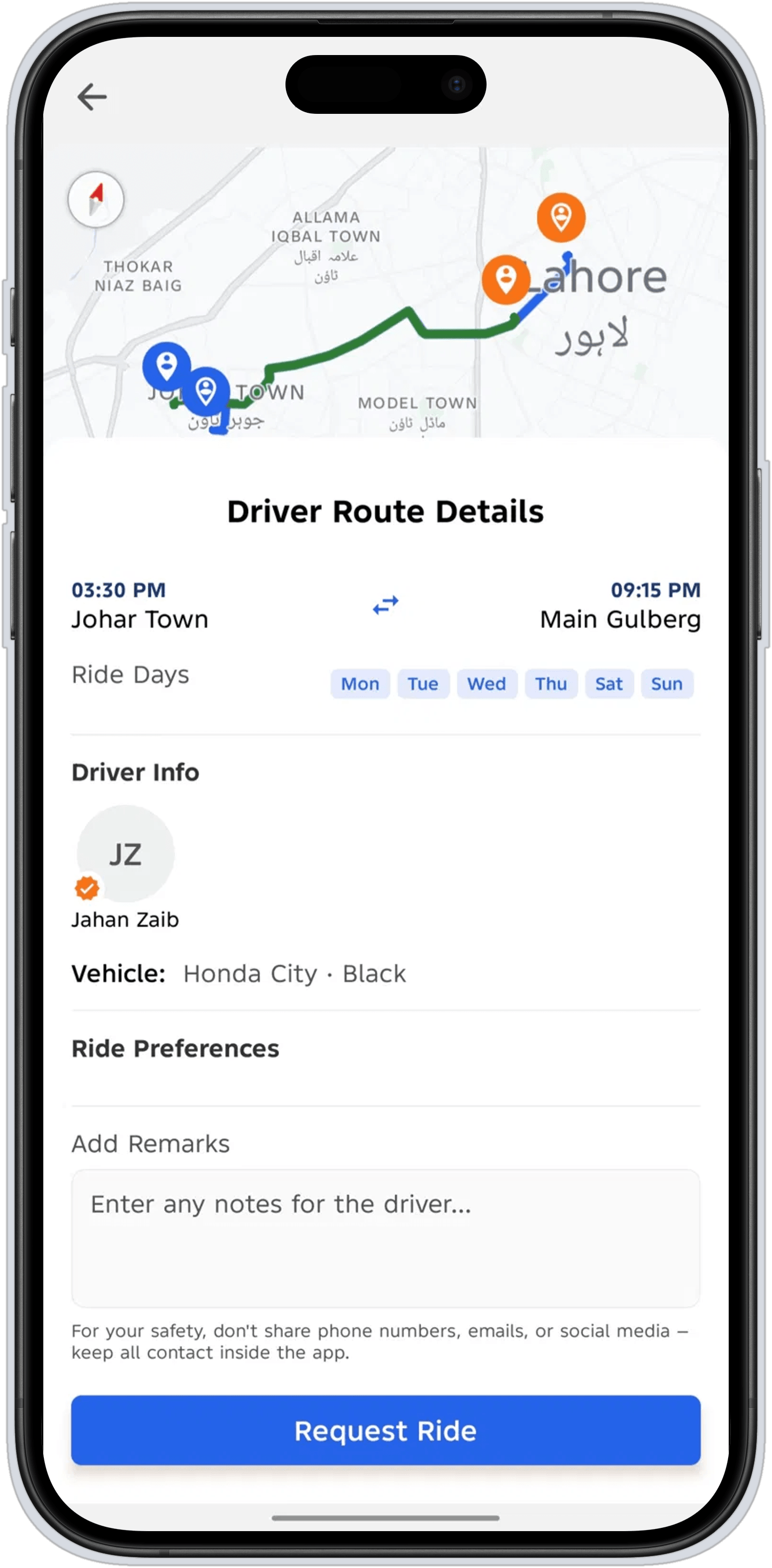
Verification only matters if it's visible at the moment you're deciding whether to book. Tap into any ride on RideMate and before you request a seat, you already know: the driver's route drawn out on a map, their name and verified badge, their vehicle right down to the colour ("Honda City · Black"), their schedule, and exactly where your pickup falls on their route. Nothing about who's picking you up should be a surprise you discover at the roadside.
Contact stays where there's a record
Verification covers who someone is before the ride. Keeping the ride itself safe is a separate, ongoing job — which is why RideMate keeps every conversation inside the app. Chat, offers, and coordination all happen on RideMate, and the app actively reminds users not to share phone numbers, emails, or social media with each other. If something ever needs to be looked into, there's a record to look at, not two people's word against each other.
If something still goes wrong
Verification and visibility reduce risk, but they don't eliminate every bad day. RideMate's complaint system is built for someone who wants an actual resolution, not a wall to shout into: describe what happened, attach a photo or video if it helps make the case, and submit — RideMate tracks it from there.
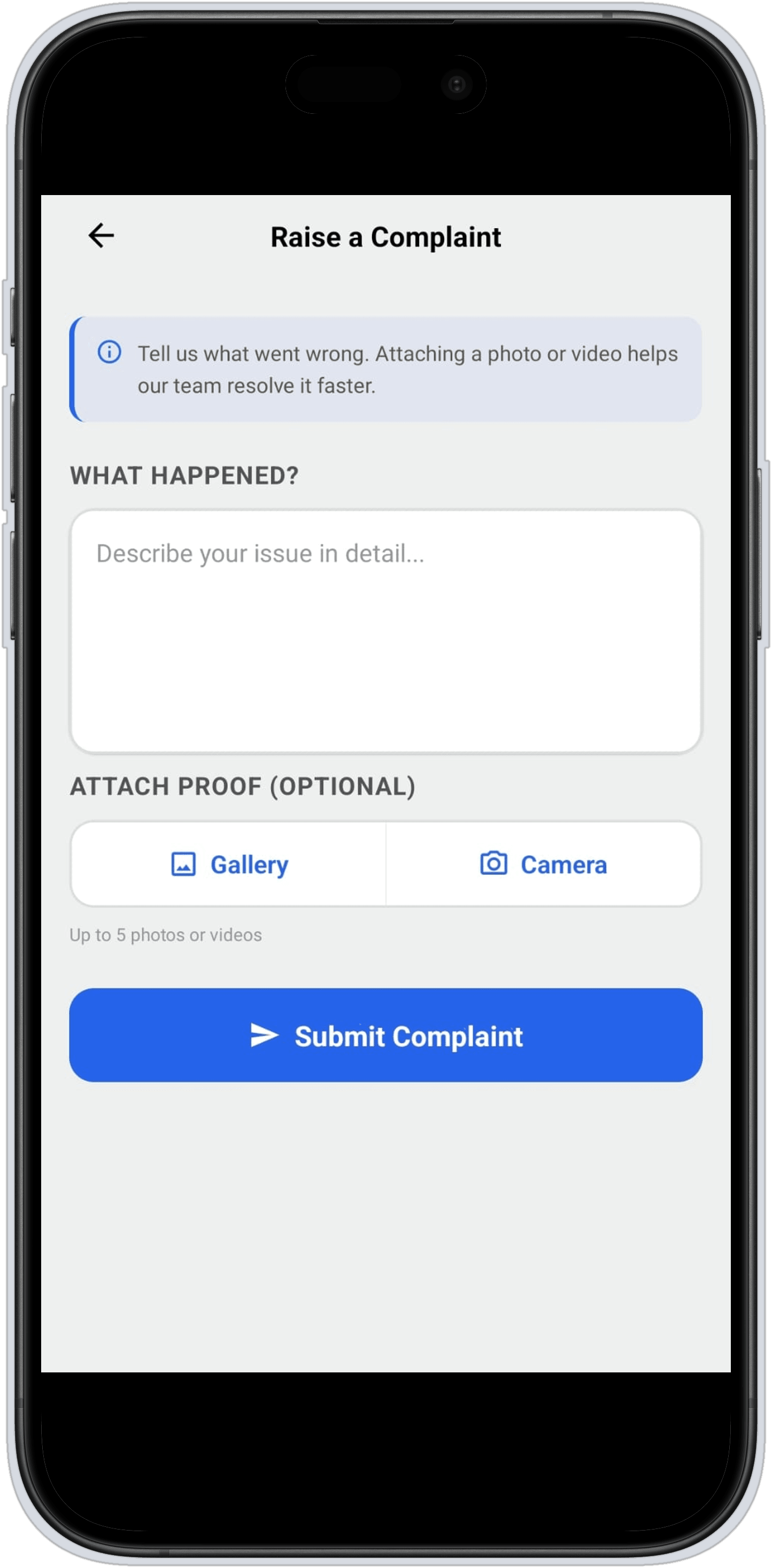
That's not the only way in, either — support runs through in-app chat, WhatsApp, email, and phone, so however you'd rather reach someone, there's a way.
Every rupee, tracked
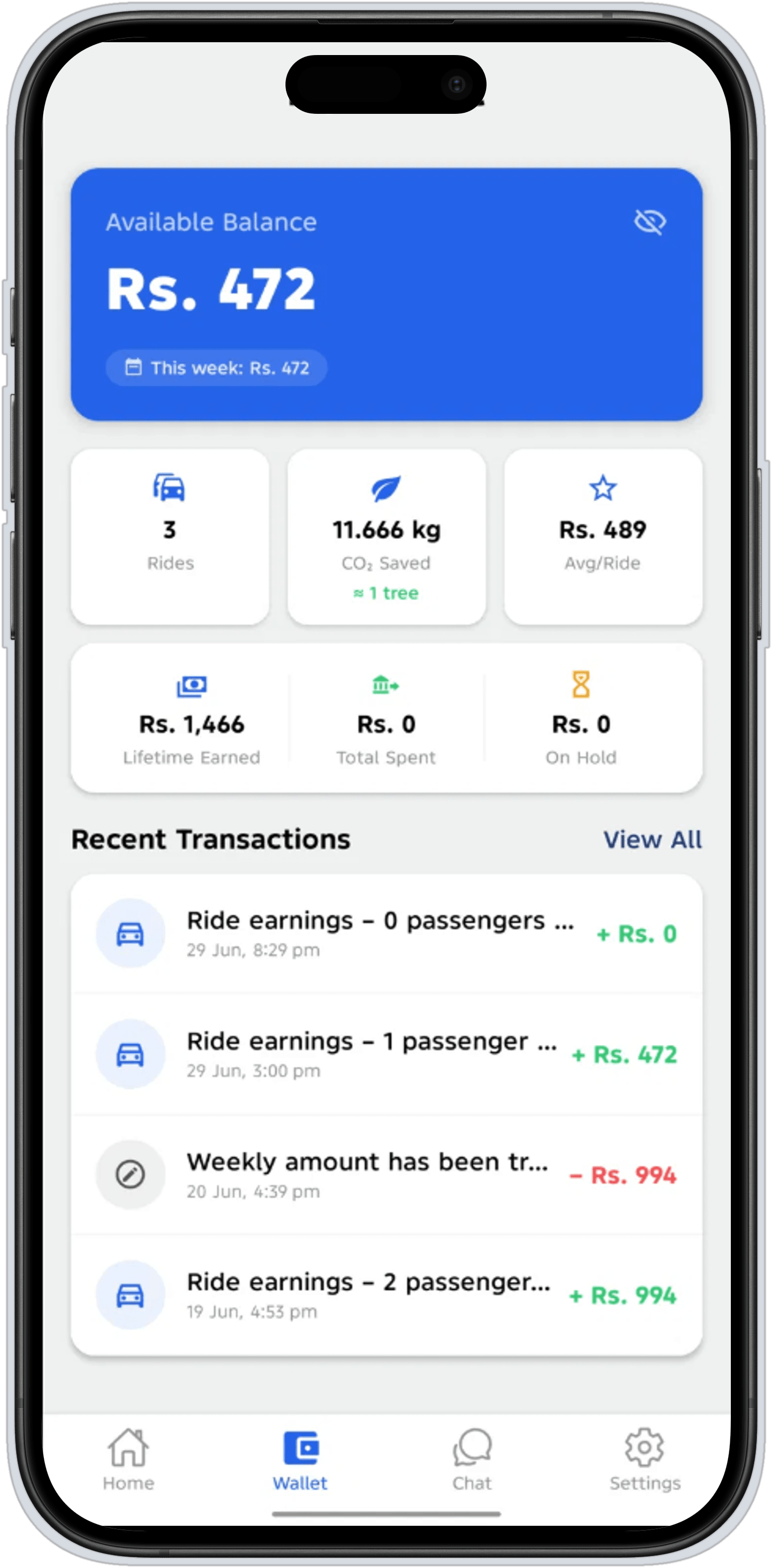
Payments on RideMate are cashless by design — everything moves through the in-app wallet, so there's no cash changing hands between strangers, no arguing over exact change, and no ambiguity about what was actually paid. Every trip, every fare, every payout is logged and stays accessible — a full ride and financial record you can check anytime, not just a receipt you might lose.
What verification doesn't promise
We'd rather be honest about the limits than oversell this. Document verification confirms identity, licensing, and vehicle legitimacy — it is not a substitute for a criminal background check, and it doesn't predict how any individual will drive or behave on a given day. No verification system, on any platform, anywhere, can promise that.
What it does do is remove the anonymous stranger from the equation. Every driver and passenger on RideMate has a real, checked identity attached to their profile, a documented vehicle, and a trail of ride history — and every ride is bookable only after you've already seen who, what, and where. That's a meaningfully different starting point than getting into an unmarked car because an app matched you with someone.
Verified drivers, verified passengers, and the full trip laid out before you book — see how it works in the app.